The Beginning
A Place Rooted in History
Long before it became the Orchard at Altapass, this land was already part of the story of the Blue Ridge Mountains.
For centuries, this mountain pass served as a natural pathway through the Blue Ridge—first for buffalo and elk, then for Cherokee travelers, and later for settlers making their way west. Its unique location, perched along one of the lowest crossings through the surrounding mountains, made it a place of movement, connection, and opportunity.
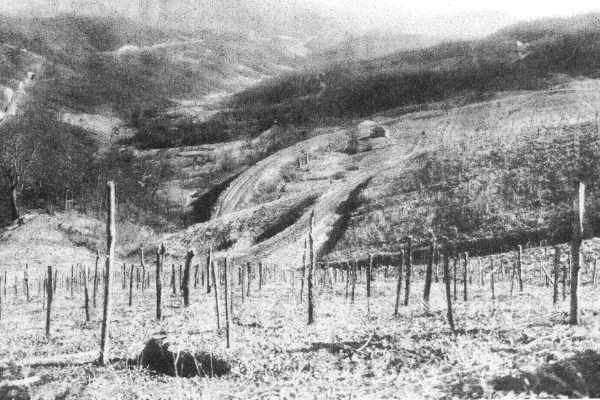
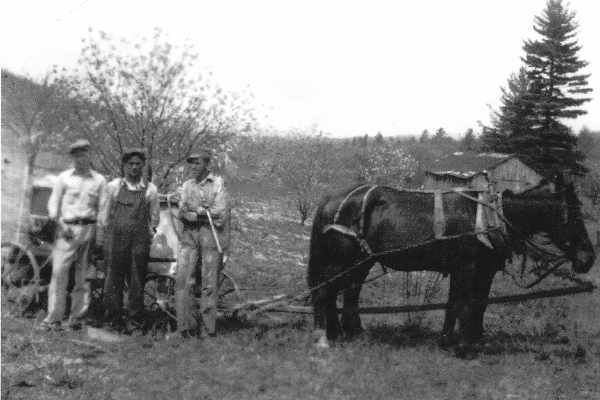
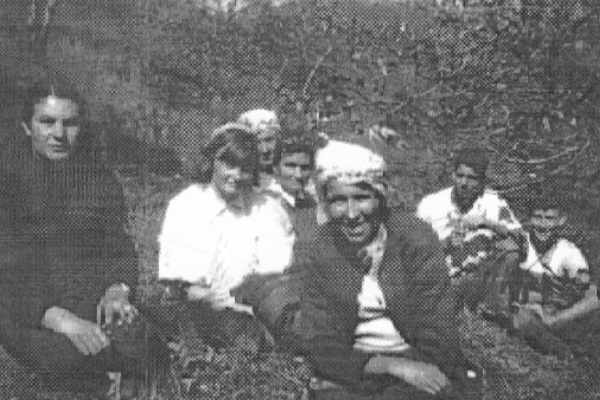
That opportunity became clear in 1908 when the Holston Land Company, working alongside the newly completed Clinchfield Railroad, purchased land on both sides of the tracks and began planting apple trees. The mountain climate was ideal for growing apples, and the orchard quickly became both a thriving business and an important source of local employment.
The original Holston Land Orchard included two sections: McKinney Gap Orchard—what would eventually become the Orchard at Altapass—and Hefner Gap Orchard farther north. Together, the orchards flourished. At its peak, more than 32,000 apple and peach trees covered the mountainsides, and during the 1930s over 50,000 bushels of fruit were shipped by rail to markets up and down the East Coast.
The railroad also helped shape the community that grew here. Holston built an elegant hotel to attract visitors and gave the area its name: Altapass, combining “alta,” meaning high, with nearby McKinney Gap’s mountain pass.
But progress often brings change.
The Great Depression slowed the region’s momentum, and when Congress approved construction of the Blue Ridge Parkway in the 1930s, the roadway physically split the orchard in two. Because commercial vehicles were prohibited on the Parkway, fruit from half the orchard could no longer reach the railroad for shipment. Production declined. Passenger rail travel faded. Over time, what had once been a bustling mountain enterprise slipped quietly into neglect.
For decades, the orchard waited.

A New Beginning
That next chapter began in 1995.
While visiting her brother and sister-in-law, Bill and Judy Carson, in nearby Little Switzerland, Kit Carson-Trubey spotted a small ad in the local paper: 277 acres of unrestricted land for sale on the Blue Ridge Parkway.
Curious, the family went to take a look.
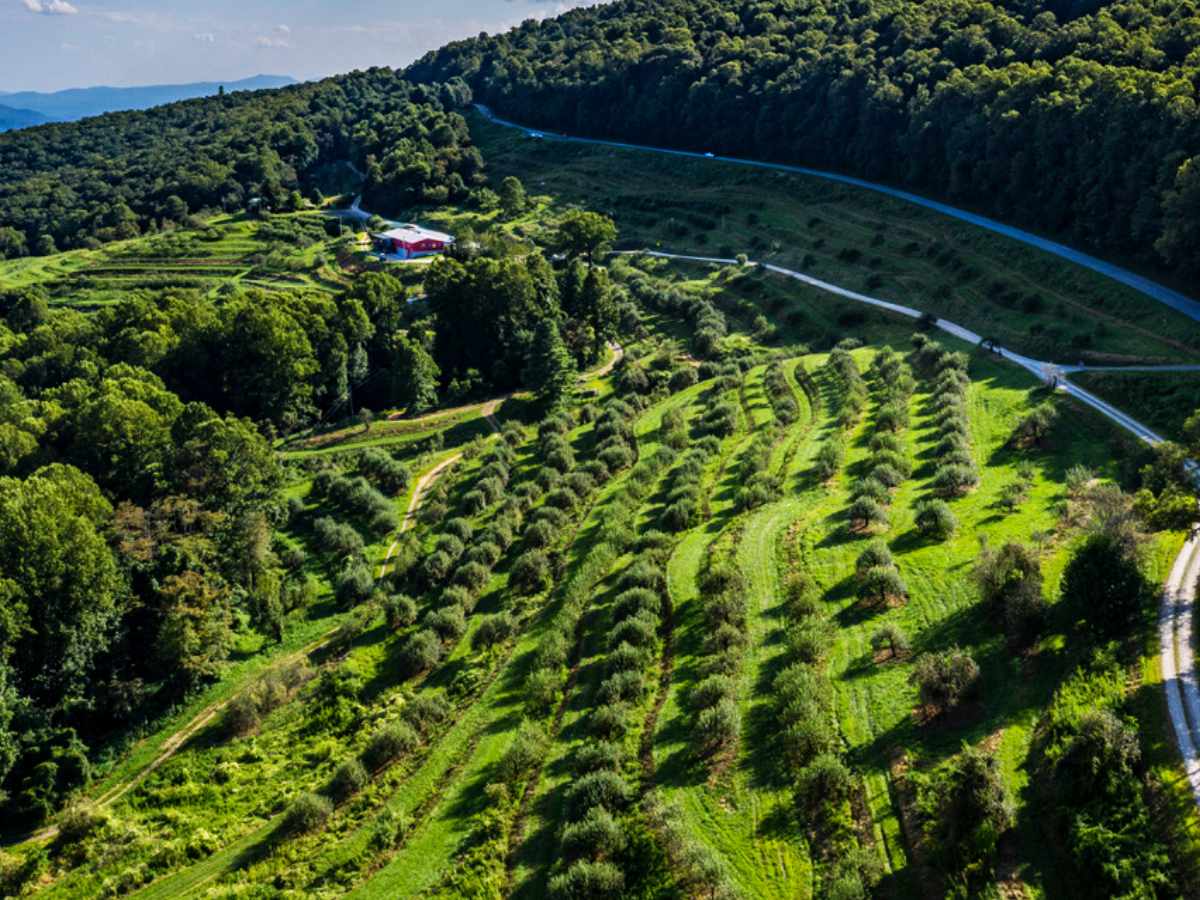
What they found was a forgotten orchard wrapped in breathtaking mountain views—beautiful, historic, and vulnerable to development. They knew immediately this place deserved another future. Kit made an offer, and together with Bill and Judy, the work of restoration began.
For two years, they pulled weeds, battled poison ivy, and slowly brought life back to the neglected land before harvesting a single apple. The old processing equipment was relocated to the basement of the red barn, where it still operates today. Apples returned to the shelves. Visitors began to gather. Soon, music filled the air.
What started as preservation became something much larger: a place where Appalachian culture could be celebrated, shared, and protected.
Between 2002 and 2004, two nonprofit organizations were established to preserve both the land itself and the heritage it represents. In 2021, those organizations came together as the Altapass Foundation, Inc., strengthening the Orchard’s mission and ensuring its future.
Though Judy Carson passed away that same year, and Bill Carson has now joined her, the vision they built endures in every tree, every song, and every visitor who comes to experience this place.
Today, the Orchard welcomes more than 100,000 guests each season. They come for heirloom apples, live traditional music, storytelling, mountain history, trails, pollinator habitats, and the simple joy of gathering together in a place that feels timeless.
The Founders’ Legacy
The Orchard at Altapass was never meant to be just an apple orchard.
From the beginning, Bill, Judy, and Kit believed this land could preserve something bigger: the spirit, stories, traditions, and natural beauty of the Blue Ridge Mountains.
That belief shaped everything they built.
Through the work of the Altapass Foundation, this land is permanently protected—not only as a historic working orchard, but as a place where future generations can experience the richness of Appalachian culture firsthand. Conservation easements safeguard the landscape itself, while educational programs, live music, storytelling, and hands-on experiences ensure the traditions of this region continue to thrive.
Bill Carson often said that after decades of hard work, the greatest reward was seeing how the Orchard changed the people who visited it.
That legacy lives on every day.
It lives in children picking apples for the first time. In families dancing to mountain music. In stories shared across generations. In the care given to heirloom trees that have stood here for nearly a century.
And it lives in the promise that this special place—and all the “good stuff” it represents—will be here for generations still to come.